

PRODUCT INTRODUCTION
Intended use
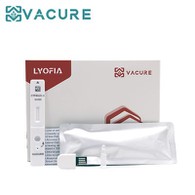
This CEA Fast Quantitative TEST Kit is a blood test to measure the amount of CEA in multiple samples like whole blood, serum and plasma on LYOFIA® platform from VACURE Biotech.
It's for professional use only.

Summary
CEA is a protein normally found in the tissue of a developing baby in the womb. The blood level of this protein disappears or becomes very low after birth. In adults, an abnormal level of CEA may be a sign of cancer.
CEA is an acidic glycoprotein with human embryonic antigen specificity. It was first extracted from colon cancer and embryonic tissues by Gold and Freedman in 1965 as a tumor-associated antigen. It was subsequently used in many other types of tumor patients for many years. Elevated concentrations of CEA can be detected in the blood of people with a history of smoking or certain other non-malignant diseases. Its physiological origin is usually derived from the embryonic endodermal epithelium of the fetus, which is controlled by fetal oncogenes and often disappears from the serum after birth. However, a small amount of CEA may remain in the colon tissue, and CEA and its related genes (among 29 18 normally expressed) constitute the human CEA family, clustered on chromosome 19q13.2.

Why Test CEA?
Clinical application of carcinoembryonic antigen (CEA) - prompts and identification of lung tumors
Studies have shown that in the serum of patients with non-small cell lung cancer, the level of CEA is significantly higher than that of healthy people and patients with benign lung diseases.
When the double cut-off value of CEA is used as a positive standard, the possibility of lung cancer is the greatest. As the clinical stage of lung cancer increases, , CEA levels also showed an increasing trend, and the long-term survival rate of CEA-positive patients was significantly lower than that of CEA-negative patients.

Regarding tumor prognosis in lung malignancies,
- Pretreatment serum CEA levels when serum CEA levels are >5 µg/L but <10 µg/L indicate low likelihood of local disease and recurrence, and therefore a favorable prognosis.
- Serum levels >10 µg/L indicate a higher likelihood of recurrence and a poorer prognosis.
- Serum titers >20 µg/L are commonly associated with metastatic disease in breast and colon cancer. However, given the variability in CEA expression or secretion, a value of <2.5 µg/L does not necessarily exclude primary, recurrent, or metastatic cancer.
For malignant lung tumors, tumor markers can be used to roughly determine the pathological type of the lung tumors.
- Generally, if NSE +ProGRP are significantly elevated, it can basically be determined to be small cell lung cancer.
- If CyFRA21-1+SCC is significantly elevated, it can be basically determined to be lung squamous cell carcinoma. If other tumor markers have no obvious abnormalities, but CEA is elevated Obviously, lung adenocarcinoma is more likely.

CEA was first discovered in colon cancer and fetal intestinal tissue, so when CEA is increased, the first thing to think about is colorectal tumors. It is generally believed that when CEA is >20µg/L, it is highly suspected that there is a tumor, and then the diagnosis is made through colorectal endoscopy/CT examination/pathological diagnosis, etc.
Tumor marker examination is an examination item (or combination of items) that requires great caution. For CEA, it can be said to be a pan-tumor marker that will increase in many tumors (digestive tract tumors and lung tumors are the most common). many).

It should be noticed that the increase is not always a tumor. It may increase in inflammatory diseases or during pregnancy. It needs to be judged based on specific symptoms and signs. However, when CEA is >20µg/L, great attention needs to be paid. At this time, the possibility of tumor needs to be ruled out. Another important use of CEA is the monitoring of the efficacy of tumor treatment and its recurrence and metastasis. When it continues to increase or increases a lot at once, you need to pay attention to whether there are new tumors or metastases, and you need to follow other examinations (especially imaging /ultrasound/pathological examination) comprehensive judgment.
Principles
This CEA Fast Quantitative TEST Kit adopts microfluidic fluorescent immunoluminescence method,which can detect the CEA levels in blood sample within 10 minutes.
Advantage

· Accurate
The CV. of Repeatability and within-laboratory imprecision is no more than 10%,the CV. of inter-lot imprecision is no more than 15%.

· Fast
The CEA (CEAglobin)Fast Quantitative TEST Kit detects the levels of CEA in just 10 minutes.

· Easy to use
Without the use of cumbersome laboratory equipment,but just requiring minimally trained laboratory personnel.
PRODUCT PARAMETER
|
TEST INFORMATION |
|||
|
Method |
Microfluidic Fluorescent Immunoassay |
Test |
LYOFIA® CEA |
|
Format |
Cassette |
Reaction Time |
10 mins |
|
Linearity |
[0.2-1000] ng/mL |
Reference Interval |
< 4.5 ng/mL |
|
Sample |
WB/S / P |
Certificate |
CE |
|
ORDERING |
|||||
|
Cat. No. |
LMTMCE25 |
Applicable analyzer |
LYOFIA-I / LYOFIA8 |
Kit Size |
25T |
|
Cat. No. |
LATMCE25 |
Applicable analyzer |
LYOFIA 100 (Full-Automatic) |
Kit Size |
25T |
Hot Tags: fia cea fast quantitative test kit, China, suppliers, manufacturers, factory, pricelist, quotation