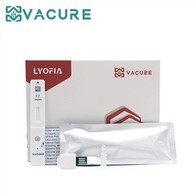


Package size
100 Tests, 50 Tests, 25 Tests, 10 Tests, 5 Tests, 100 Tests (N-QC), 50 Tests (N-QC), 25 Tests (N-QC), 10 Tests (N-QC), 5 Tests (N-QC).
Intended use
This device is intended to be used for the in vitro quantitative determination of Luteinizing Hormone (LH) in human whole blood, serum or plasma. And it is for professional use only, not for self-testing of untrained individuals, nor for near-patient testing.
Summary
In women's menstrual cycle, due to the regulation of the hypothalamic-pituitary-ovarian axis (HPOA), the follicles develop normally and ovulate. Gonadotrophin-releasing hormone (GmRH) secreted by the hypothalamus acts on the gonadotropin cells of the pituitary to secrete follicle-stimulating hormone (FSH) and luteinizing hormone (luteinizing hormone, LH) in a pulsatile, and also acts on the ovary to promote the normal development and ovulation of follicles by the way of accepting the positive and negative feedback regulation of the ovary at the same time.
Both FSH and LH are glycoprotein hormones, which are formed by covalent bonding of two subunit peptide chains, α and β. They have the common α subunit structure, but the β subunit structure is different. The β subunit determines the specific antigenicity and specific function of the hormone, but it must be combined with the α subunit to form a complete molecule to have biological activity.
LH consists of an α-subunit composed of 92 amino acids and a β-subunit composed of 112-115 amino acids, encoded by a single gene on chromosomes 6 and 19. The LH receptor gene carries as many as 282 SNPs.
Like other hormones, LH has corresponding receptors and must bind to the corresponding receptors to exert biological effects. The LH receptor (luteinizing hormone receptor, LHR) gene is located on chromosome 2 and is mainly expressed in female theca cells (TCs). LH promotes androgen production in TCs, which in turn provides androstenedione as a substrate for estrogen synthesis. Androgens form estradiol through aromatization by granulosa cells. Polymorphic changes in the LH receptor may also lead to disease.
FSH and LH could work together to promote the growth and development of follicles and ovulation. Although FSH independently promotes follicle growth in the absence of LH, it may result in insufficient estradiol (E2) secretion and lack of capacity of luteinization and rupture. Initially, there is no LH receptor on granulosa cells. With the growth and development of follicles, FSH induces granulosa cells to generate LH receptors. Due to the upper limit of LH level varies among developmental stages and individual follicular development. When LH exceeds the upper limit, it inhibits the proliferation of granulosa cells, leading to follicular regression atresia or premature follicle luteinization, which suggests that LH has a negative selection effect on non-dominant follicles. During ovulation, the estrogen produced by the follicles has a positive feedback on the pituitary and hypothalamus to form the LH peak before ovulation, which can prompt the oocyte to resume the first meiosis and terminate in the middle of the second meiosis. The eggs are finally matured and released. During the luteal phase, the main role of LH is to maintain luteal function and promote the secretion of estrogen and progesterone.
The current clinical methods for detecting LH include chemiluminescence, immunochromatography and so on.
PRODUCT PARAMETER
|
TEST PARAMETER |
|||
|
Method |
Microfluidic Fluorescent Immunoassay |
Test |
LYOFIA® LH |
|
Format |
Cassette |
Reaction Time |
10min |
|
Linearity |
0.2~250mIU/L |
Reference Interval |
IFU |
|
Sample |
WB / S / P |
Certificate |
CE |
|
ORDERING |
|||||
|
Cat. No. |
LMTHLH25 |
Applicable analyzer |
LYOFIA-I, LYOFIA 8, |
Kit Size |
25T |
|
Cat. No. |
LATHLH25 |
Applicable analyzer |
LYOFIA 100 (Full-Automatic) |
Kit Size |
25T |
APPLICATION SCENARIOS

Hospitals

Laboratory

Clinics

Ambulance

Cardiology

Pediatrics

Emergency

CSC
FAQ
Q: Does whole blood sample hemolysis, lipidemia, or fibrin, etc., have any effect on the product?
A: There will be an impact, so be careful.
Q: Are there any requirements for reagent storage?
A: The storage temperature of our reagents is room temperature, 2-30℃
Q: Reagent expiration date?
A: 12 months.
Hot Tags: luteinizing hormone (lh) kit, China, suppliers, manufacturers, factory, pricelist, quotation