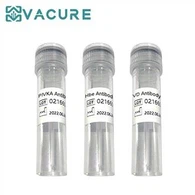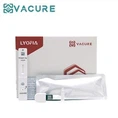


Package size
100 Tests, 50 Tests, 25 Tests, 10 Tests, 5 Tests, 100 Tests (N-QC), 50 Tests (N-QC), 25 Tests (N-QC), 10 Tests (N-QC), 5 Tests (N-QC).
Intended use
This device is intended to be used for the in vitro quantitative determination of placental growth factor (PLGF) and soluble fms-like tyrosine kinase 1 (sFLT-1) in human whole blood, serum or plasma. And it is for professional use only, not for self-testing of untrained individuals, nor for near-patient testing.
Summary
PLGF is a member of the Vascular endothelial growth factor (VEGF) family, encoded by the PLGF gene, and is a glycosylated homodimeric protein involved in angiogenesis. The human PLGF gene is located in band 4, region 2 of chromosome 14, consisting of 7 exons, and 4 transcripts are formed by selective splicing of mRNA, PLGF-1, PLGF-2, PLGF-3 and PLGF-4. Among them, PLGF-2 and PLGF-4 have heparin-binding domains, encode cell membrane-associated proteins and function in an autocrine manner, while PLGF-1 and PLGF-3 function in a paracrine manner. Through autocrine and paracrine mechanisms, PLGF promotes trophoblast proliferation and differentiation, induces endothelial cell proliferation and migration, resists endothelial cell apoptosis, increases vascular permeability, and enhances the biological activity of VEGF[1], which is beneficial to the growth of the placenta, studies have shown that the expression of PLGF in normal non-pregnant women is very low and almost undetectable, while the expression level is increased in the placenta of normal pregnant women. The expression of PLGF is earlier during pregnancy, and it was detected in the serum of pregnant women at 8 weeks of gestation, but its expression was relatively low. From 10 weeks of gestation, the expression in serum increased successively with the increase of gestational weeks, peaked at 30 weeks of gestation, and then decreased due to the decline of placental function until delivery [2]. Placental growth factor is an important cytokine during pregnancy and plays an important role in promoting angiogenesis during the fetoplacental circulation. Research and development found that the decline in plasma PLGF levels in pregnant women occurred earlier than the onset of clinical symptoms of preeclampsia, and it is an excellent predictor of preeclampsia [1]. Vascular endothelial growth factor (VEGF) is a secreted glycosylated polypeptide factor. It is a pro-angiogenic factor that maintains normal endothelial function and promotes placental vascular development, while also maintaining the function of vascular homeostasis. Vascular endothelial growth factor has two receptors, VEGFR-1 and VEGFR-2, which promote and maintain the growth of vascular endothelial cells under the combined action of both. VEGFR-1 can be further divided into membrane VEGFR-1 (mVEGFR-1) and soluble VEGFR-1 (sVEGFR-1) according to the difference in structure. sVEGFR-1, also known as sFLT-1, is a polyglycosylated protein mainly produced and secreted in placental tissues. A type III receptor belonging to the tyrosine kinase family with tyrosine kinase activity. Studies have found that sFLT-1 has an anti-angiogenesis effect, can affect the permeability and integrity of vascular endothelial cells, and plays an important role in the construction of placental blood vessels [3]. In patients with preeclampsia, sFLT-1 can bind to VEGF-A and PLGF, respectively, and block the transduction of their pro-angiogenic signaling pathways, thereby causing systemic vasospasm and symptoms such as hypertension and proteinuria [3]. Early diagnosis of preeclampsia is very important to the health of pregnant women (parturients) and fetuses. Serological markers, especially angiogenesis factor markers represented by sFLT-1 and PLGF, show good auxiliary diagnostic performance, and have shown a positive role in the decision-making of hospitalization management of pregnant women with suspected preeclampsia.
The current clinical methods for detecting PLGF & sFLT-1 include chemiluminescence, immunochromatography and so on.
PRODUCT PARAMETER
|
TEST PARAMETER |
|||
|
Method |
Microfluidic Fluorescent Immunoassay |
Test |
LYOFIA® PLGF & sFLT-1 |
|
Format |
Cassette |
Reaction Time |
10min |
|
Linearity |
PLGF [15, 10000]pg/mL sFLT-1 [100, 85000]pg/mL |
Reference Interval |
IFU |
|
Sample |
WB / S / P |
Certificate |
CE |
|
ORDERING |
|||||
|
Cat. No. |
LMPEPS25 |
Applicable analyzer |
LYOFIA-I, LYOFIA 8, |
Kit Size |
25T |
|
Cat. No. |
LAPEPS25 |
Applicable analyzer |
LYOFIA 100 (Full-Automatic) |
Kit Size |
25T |
APPLICATION SCENARIOS

Hospitals

Laboratory

Clinics

Ambulance

Cardiology

Pediatrics

Emergency

CSC
FAQ
Q: Is it possible to add emergency testing to our instrument in the middle of the testing process?
A: LYOFIA 100, DISKFLU 1000, these two instruments can achieve.
This question is placed under LYOFIA 100, DISKFLU 1000, these two products.
Q: Does whole blood sample hemolysis, lipidemia, or fibrin, etc., have any effect on the product?
A: There will be an impact, so be careful.
Q: What is our product testing time?
A: There are 5-15 minutes, CRP is 5 minutes, and most others are 10 minutes.
Q: Is it possible to OEM?
A: Yes. Clients need to authorize brands and provide design solutions.
Hot Tags: plgf and sflt-1 test kit, China, suppliers, manufacturers, factory, pricelist, quotation