




How much do you know about Allergy?
July 8th is World Allergic Disease Day. This year's theme is "Preventing Allergic Diseases and Promoting Healthy Living". In the past 30 years,the incidence of allergic diseases has increased by at least three times, and the current global prevalence has reached 22%. It is estimated that 50% of the population in industrialized countries will suffer from allergic diseases in 20 years.
 Allergy has been listed by the World Health Organization (WHO) as one of the three major diseases that should be prevented and controlled in the 21st century.
Actually,allergy has long been devalued. It can cause more serious consequences than you think.
Early diagnosis and correct management of allergic diseases are crucial needed.
How much do you know about allergy? Let's get some knowledge about it!
What are allergy?
What are the dangers of allergy?
High-risk groups for allergies
Is it a cold or allergy?
Find out the allergens around you
Don't Miss These 5 Allergy Symptoms
What are allergy?
Allergic diseases, also known as allergic diseases, are due to the high sensitivity of the patient to produce a specific immunoglobulin E antibody (IgE) in the blood that is allergic to a particular allergen. This patient has a genetic predisposition.
 IgE sensitivity can lead to the following typical allergic diseases: asthma, rhinitis, atopic eczema, conjunctivitis, food allergy, drug allergy, and anaphylactic shock. The most common of these are allergic rhinitis and allergic asthma caused by allergens such as pollen, dust mites, fungi and pets.
Decreased serum levels of IgE can guide consumption of allergens.
What are the dangers of allergy?
An allergic reaction is an abnormal immune response in the body to a substance that a normal person can tolerate. Allergic diseases can affect multiple systems throughout the body, and allergic rhinitis can affect the nose, eyes, mouth, throat, lungs, heart, etc., causing damage to multiple systems and organs.

After exposure to allergens, patients can develop from mild skin symptoms to angioedema, blood pressure drop, arrhythmia, loss of consciousness, shock and even death within minutes.
Allergic diseases are a general term, and the symptoms are quite different in different parts of the occurrence, and the reasons are also different from person to person.
● Respiratory system allergies: including allergic rhinitis, allergic tracheitis, allergic asthma, etc., mainly manifested as sneezing, runny nose, watery eyes, itchy nose, wheezing, suffocation.
● Skin allergies: eczema, drug rash, urticaria, contact dermatitis, etc., 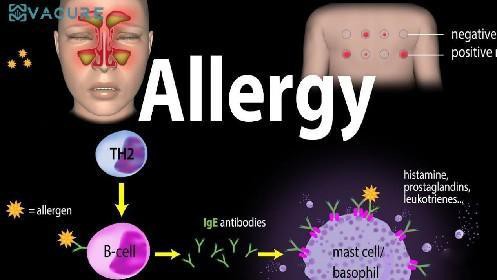 manifested as various rashes, most of which are characterized by redness, swelling, and itching.
● Eye allergies: Allergic conjunctivitis can be caused, and the eyes will be red, swollen, itchy, and have sticky secretions.
● Gastrointestinal allergy: Abdominal pain, vomiting, abnormal defecation and other symptoms may occur in patients with gastrointestinal allergy.
In the case of severe allergies, systemic allergic reactions such as skin flushing, suffocation, decreased blood pressure, blurred vision, syncope, and loss of consciousness may also occur.
High-risk groups for allergies
There are 4 types of people are at high risk for allergies.
1.People whose parents suffer from allergic diseases;
2. People living in areas with a high degree of industrialization and good environmental sanitation;
3. People who are under chronic stress for a long time;
4.People who are allergic themselves.
Is it a cold or allergy?
At present, there are various allergen inspection methods. The following four methods are recognized by authoritative organizations at home and abroad and proved to be meaningful through practice. Parents should read carefully:
 Allergen skin prick test (or intradermal test)
Generally, various common allergens are dripped on the skin on the palm side of the forearm, and gently pricked with a pricking needle to allow the allergens to contact with the immune cells in the skin, and the results can be seen after 15-20 minutes. If there are itchy wheals on the surface of the skin, congratulations, you may be allergic to this substance. The advantage of the inspection is that it is quick and the results are reported immediately. Oral antiallergic drugs should be stopped for more than 3-7 days before the examination.
In vitro detection of allergens
only need to draw a tube of blood, and conduct food-specific IgE (not IgG) examination to determine the substances that cause your allergies. Common food allergens such as eggs, milk, shrimp and crab, etc., and inhalant allergens such as dust mites, mold, cat and dog hair, pollen, etc. can be accurately detected by IgE(allergy) test kit. The in vitro blood test does not require discontinuation of anti-allergic drugs, no fasting, and no age limit.
 Activation est
There are food activation, nasal activation, bronchial activation test, etc. Take food activation as an example, it is to let you eat something that may cause allergies, starting from a small amount, gradually increasing to a certain amount, and observing whether there are allergic symptoms in the process of increasing the amount. If you are not sure about the degree of allergy, the food challenge test is very risky, so the whole process must be carried out under the supervision of a professional doctor, and you must not try it at home.
Patch test
It is to prepare commercial (standardized) patch reagents from substances that are often exposed to in daily life and various occupations and may cause allergies, stick them on the back, and observe the skin reaction after 2-3 days. The patch test is currently the simplest and most accurate method for diagnosing contact skin allergic reactions.
Find out the allergens around you
Allergens are antigens that cause people to be allergic. They can be found in the air, food, drink, medicine, and daily necessities, almost everywhere. Patients with common allergies can only solve the root problem by confirming the source through allergen screening tests.
 According to different ways of exposure to allergens, they are usually divided into 4 categories:
◆Inhalation allergens, including pollen, dust mites, mold, pet dander, etc.
◆Food allergens, such as milk, eggs, grains, beef and mutton, seafood, nuts, etc.
◆Contact allergens, including various cosmetics, hair dyes, organic solvents, etc.
◆Drug allergens can cause sensitization and allergic reactions through ingestion, inhalation, contact or injection.
Among them, the allergic reaction induced by injection is the most serious, such as injection penicillin, streptomycin, carcinogenic serum, etc. Therefore, if the drug can be taken orally, do not inject it.
Don't Miss These 5 Allergy Symptoms
Some allergic symptoms are easy to be ignored. When the following symptoms appear in the body, it means that you may be recruited.
 Often itchy nose
When entering and leaving an air-conditioned room or when the temperature difference between morning and evening is large, the nose itches unbearably, and the nose is runny, and sometimes sneeze more than a dozen times in a row. Consider whether it is an allergy.
Nasal congestion lasts for a long time, and there is a "swoosh" sound when breathing
Nasal congestion caused by a cold usually heals within a week. If it lasts for too long, it may be caused by allergies.When the airway is blocked,you will cough, chest tightness, and wheezing. When you find that you are breathing with a "swoosh"sound, it may be caused
by allergies.
 Red, swollen and itchy eyes
When the eyes are itchy, the use of anti-inflammatory eye drops not only does not improve but worsens, so be alert to allergic conjunctivitis.
Allergic conjunctivitis is often accompanied by other allergic symptoms such as allergic rhinitis, such as eye itching, congestion, edema or eyelid edema, tearing, and watery discharge.
Always sleepy
If you get enough sleep, you are still prone to sleepiness during the day, so you should be alert for allergies. If the environment around the office area is relatively closed and the air circulation is poor, allergens such as dust mites and mold can easily accumulate. In addition, dust, tobacco, perfume, etc. may all become allergens.
 Loss of appetite
Children with anorexia, irritability, physical fatigue, repeated vomiting, and prolonged diarrhea may have food allergies. They may also have symptoms such as flushing of the skin around the mouth and macules after eating the allergenic food.
Can allergies be completely cured?
In medicine, although allergies cannot be cured, they can be prevented and controlled. The key lies in the word "prevention". If allergens are prevented, allergies can be controlled.
Allergic diseases focus on prevention:
 Find out allergens and try to avoid contact with allergens
First, determine whether there is a family history of allergies.
Secondly, detect the allergens. There are many methods for detecting allergies. For example, radiation allergen adsorption test, skin allergy prick test, blood drawing and other methods, after determining the allergen, avoid contact with the allergen. Patients with allergic rhinitis should try to avoid going out during the pollen season, and even if they go out, they should take protective measures
For example, wear a mask for protection, and choose a mask with a good filtering effect to wear when going out, which can effectively filter dust and pollen in the air and avoid irritation of the nasal mucosa by allergens.
It is not suitable to keep pets at home
The sebaceous glands, lacrimal glands, and salivary glands of pets such as cats and dogs all secrete an allergen, which often adheres to some small debris or dust, floats into the air, and directly contacts the human body to induce allergic reactions. Therefore, in order to prevent and treat allergic diseases, pets such as cats and dogs should not be kept.
Keep a clean room environment
The room should be kept clean and ventilated, and bedding and sheets should be washed and dried frequently, and blankets and silk sheets should not be used.
It is not advisable to move in immediately after interior decoration. If you want to use a fan or air conditioner, it needs to be cleaned in advance.
 Moderate exercise to regulate emotions
Insist on exercising to improve the body's immunity, which can effectively improve the allergic constitution, and advocate some mild aerobic exercise. For example: jogging, practicing yoga, etc. For patients with allergic asthma, avoid high-intensity and heavy exercise, and try to do physical exercise indoors.
Allergic diseases are refractory and refractory diseases, and maintaining a positive and optimistic mood is also crucial to the prevention and treatment of diseases. People with allergies should cultivate their own broad interests and hobbies, and cultivate optimism and happiness.
Allergies are no small matter, ranging from affecting the quality of life, to threatening life and health. Better understand it so that better prevent it, there’s more possibility to live a more comfortable life.
